
Macular degeneration is an eye condition that requires careful monitoring, and that’s exactly what our team has provided to Andalusia and Brewton for nearly four decades. At Tillman Family Eye Care, we take a personal, medically focused approach to helping patients understand their diagnosis, track changes, and protect their ability to read, drive, and see the people they love most.
Macular Degeneration Care in Andalusia & Brewton

central vision loss
What Is Macular Degeneration?
Age-related macular degeneration (AMD) affects the macula, the central part of the retina responsible for sharp, detailed vision. It is one of the leading causes of vision changes in adults over 55, though it often progresses quietly in the early stages.
Quick Links
The Two Types of AMD
-
Dry AMD: The macula thins gradually over time. Many people notice subtle difficulties with reading, fine details, or adjusting to low light.
-
Wet AMD: New, fragile blood vessels grow beneath the retina and can leak fluid. This form can progress quickly and requires prompt evaluation and treatment by a retinal specialist.
Most patients who come to us for AMD management have the dry form, which is easier to monitor and often progresses slowly with proper care.
The Importance of Early Detection
Macular degeneration usually begins without noticeable symptoms. The sooner we identify early changes, the better we can protect central vision and guide you on steps that support long-term retinal health. During each visit, we look for signs such as:
-
Drusen (tiny yellow deposits)
-
Changes in macular thickness
-
Pigment changes
-
Distortion on an Amsler grid
-
Gradual shifts in clarity
These small details tell us a lot about your overall eye health and what level of monitoring will be most helpful moving forward.
How We Monitor Macular Degeneration
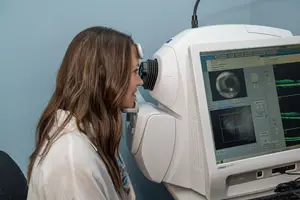
At Tillman Family Eye Care, we use advanced retinal imaging to monitor your macula over time and detect any changes that may require additional treatment. Tools we use include:
-
Optical Coherence Tomography (OCT): Provides detailed, cross-sectional images of the retina to measure structural changes.
-
Optos California Widefield Retinal Imaging: Allows us to document the back of the eye and track subtle changes in the macula over time.
-
Visual Acuity Testing: Helps us understand how your sight is changing over time.
AMD Treatment in Andalusia & Brewton
While there is currently no cure for macular degeneration, there are ways to slow progression, support retinal health, and preserve vision. Your care plan may include:
-
Nutritional guidance for eye health
-
AREDS2 supplements when appropriate
-
UV protection recommendations
-
Monitoring for signs of wet AMD
-
Regular checkups tailored to your risk level
If we ever see signs that the retina requires specialized care, we coordinate promptly with trusted retinal specialists.
How to Support Your Vision at Home
There are simple steps you can take between visits to help protect your macular health:
Avoid Smoking
Smoking significantly increases the risk and progression of AMD.
Wear Sunglasses
Protecting your eyes from ultraviolet (UV) light helps reduce stress on the retina.
Choose Nutrient-Rich Foods
Leafy greens, colorful vegetables, omega-3s, and foods rich in lutein and zeaxanthin support retinal health.
Common Questions About AMD
There is currently no cure, but early detection and proper management can slow progression and protect your central vision.
AMD affects central vision, not peripheral vision. Many patients maintain useful vision throughout life, especially with consistent care.
Yes. AMD often begins without noticeable vision changes, which is why routine eye exams is so important.
Schedule Your Macular Degeneration Evaluation
Macular degeneration can feel intimidating at first, but you don’t have to navigate it alone. If you have a family history of AMD, are noticing changes in your central vision, or want to stay proactive about your eye health, we’re here to help. Schedule your macular degeneration evaluation, and let our team guide you with steady, thoughtful care.