Specialty lenses can be life-changing for the right patient, but they are never a one-size-fits-all solution. At. Tillman Family Eye Care, our goal is to help you find a lens that supports your comfort, protects your eye health, and fits into your daily routine.
Specialty Contact Lenses in South Alabama

Beyond the basics
A Tailored Approach to Contact Lenses
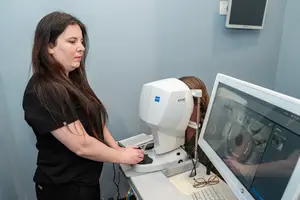
Specialty contact lenses are used when a traditional soft lens doesn’t provide the clarity or comfort a patient needs. During your contact lens exam, we evaluate the surface of your eye, corneal shape, tear film, and any medical conditions that affect contact lens wear. Once we understand exactly what your eyes need, we guide you toward the right lens option.
Quick Links
Scleral Contact Lenses
Scleral lenses are one of the most helpful tools available for patients with severe dry eye or irregular corneas. Instead of resting on the cornea, these lenses rest on the white part of the eye (the sclera), creating a smooth optical surface and a reservoir of moisture beneath the lens. Scleral lenses may be helpful for:
-
Irregular corneas
-
Keratoconus
-
Post-surgical corneal changes
-
Severe dry eye
-
Conditions where soft lenses frequently dislodge or feel uncomfortable
Rigid Gas-Permeable (RGP) Lenses
RGP lenses provide crisp vision and are a dependable option for certain prescriptions or corneal conditions. Although they require an adjustment period, many long-term wearers appreciate their clarity, stability, and durability. These lenses may be recommended when:
-
A patient needs sharper vision than soft lenses can provide
-
The corneal shape requires a more structured lens
-
Long-term durability is a priority
Specialty Lenses for Certain Eye Conditions
Certain eye conditions require a more individualized lens approach. Specialty lenses may be recommended for patients with:
Irregular Corneas
An irregular cornea has an uneven surface, making it difficult for standard contact lenses to sit properly and provide clear vision.
Corneal Scarring
Scarring on the cornea can distort light as it enters the eye, leading to blurry or inconsistent vision.
Keratoconus
Keratoconus causes the cornea to thin and bulge into a cone-like shape, making specialty lenses helpful for improving stability.
Post-surgical Corneal Changes
After certain eye surgeries, the cornea may heal in a way that alters its shape, requiring a specialty lens.
Chronic dry eye
Severe dry eye can make traditional contact lenses uncomfortable, but specialty lenses like sclerals can help protect retain moisture.
High Prescriptions
Patients with very strong or unusual prescriptions sometimes need specialty lenses to achieve the best possible clarity and comfort.
Are Specialty Lenses Right for You?
Not every patient needs a specialty contact lens, and we never recommend them unless they offer clear benefits for your comfort or visual clarity. They are most helpful for patients who:
-
Have not found success with standard soft lenses
-
Experience discomfort or dryness with traditional options
-
Have medical or structural corneal conditions
-
Struggle with stable, consistent vision in regular lenses
If you’ve been told before that you “can’t wear contacts,” a specialty lens evaluation may reveal options you haven’t explored yet.
Schedule Your Contact Lens Exam
Finding the right contact lens begins with a careful evaluation and a team you can trust. At Tillman Family Eye Care, we help you explore your options and feel confident in the next steps. Schedule your specialty contact lens consultation, and let our team help you find clarity and comfort.