
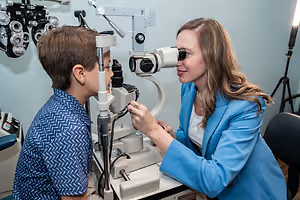
If your child can spot a favorite toy across the room but can’t name a single letter, they can still have an eye exam. At a pediatric eye exam, the eye doctor uses age-appropriate tests to check how clearly your child sees, how their eyes work together, and whether their eyes are healthy.
What Happens During a Pediatric Eye Exam?
A comprehensive eye exam starts with a conversation about your child’s health and what you’ve noticed at home. After that, the eye doctor chooses tests based on your child’s age, comfort, and the reason for the visit.
Vision and Prescription
A child who knows their letters may read from a chart. Younger children may match pictures or symbols instead. For a child who can’t yet point or speak, the doctor can watch how each eye follows a toy or light and use a handheld instrument to estimate whether glasses might help.
Eye Movement and Teamwork
The doctor may ask your child to follow a small target with their eyes or cover one eye at a time. This helps the doctor see how each eye moves and whether the two eyes line up when your child looks at something.
Eye Health and Dilation
The doctor checks the health of the eyes and may recommend dilating eye drops. These drops widen the pupils so the doctor can see more of the inside of the eye. Some drops also temporarily relax the eye’s focusing muscles, which can help the doctor measure the prescription. Bright light may bother your child afterward, and close-up tasks like reading may look blurry for a while. If the doctor recommends drops, ask what to expect for the rest of the day.
What Should You Bring to the First Visit?
You don’t need to practice an eye chart at home. Bring a few items that help the doctor see the same picture you do:
- Any glasses your child already wears and any past eye exam or vision screening results you have.
- A list of medicines and relevant health or family eye history, such as a parent or sibling who had a lazy eye as a child.
- A short note about what you noticed and when. For example, if one eye sometimes drifts, note whether it happens when your child is tired or looking at something nearby.
- Sunglasses or a brimmed hat in case your child’s eyes are sensitive to light after dilation.
If this is your first visit with us, check our online patient forms before you leave home. You can tell your child, “The doctor will ask you to look at a few things and may shine a light to check your eyes.”
Schedule Your Child’s First Eye Exam
You don’t have to wait until your child knows their letters. Choose our Andalusia or Brewton office and let us know your child’s age and any concerns when you schedule.
First Eye Exam FAQs
What If My Child Is Nervous or Shy?
Tell the office when you schedule if your child worries about unfamiliar places, bright lights, or someone getting close to their face. The doctor can choose tests your child is able to try and explain what they can before each step.
What If a Vision Screening Flagged a Concern?
Bring the screening results if you have them. A screening flags a possible problem. A full exam helps the eye doctor find out what caused the result and whether your child needs glasses, follow-up care, or another evaluation.
What Should I Ask Before We Leave?
Ask what the doctor found in each eye, whether your child needs glasses, and when to return. If the doctor prescribes glasses, ask when your child should wear them and what to look for in children’s frames so they fit well during play and school.